
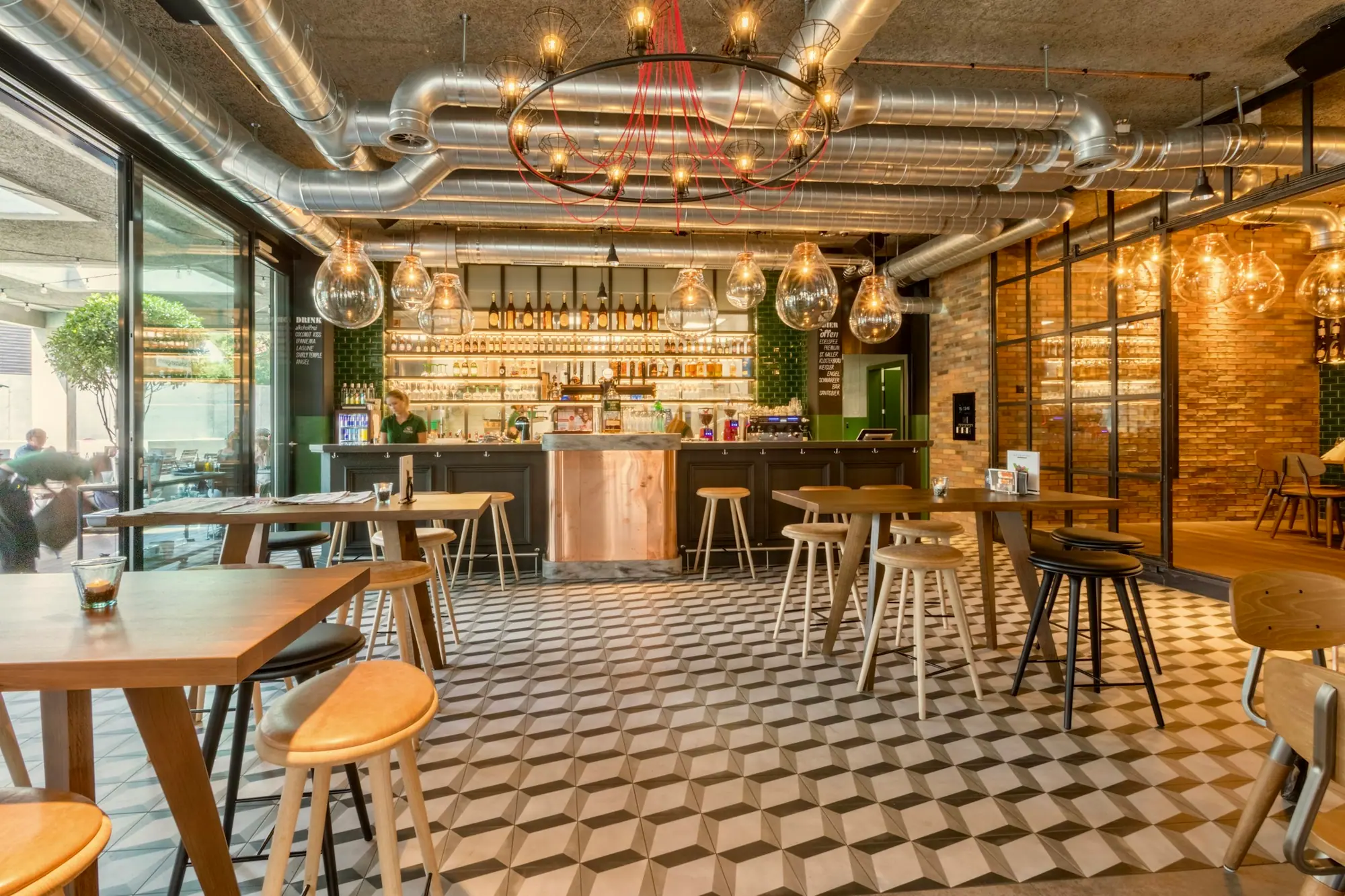
Kitchener · Restaurant & Café Renovations
Restaurant and Café Renovations in Kitchener
King Street’s brick blocks from the late 1800s to the 1920s hold most of downtown Kitchener’s restaurants, with wood floors over stone or brick basements. A restaurant or café renovation in those King Street buildings starts with two questions. Can the floor carry a walk-in cooler, and where can the grease duct reach the roof?
Restaurants in Kitchener
What’s different in Kitchener
| Permit office | City of Kitchener Building Division (official site, opens in a new tab) |
|---|---|
| Health unit | Region of Waterloo Public Health: notification form with a floor plan, then a pre-opening inspection. |
| Grease interceptor | Region Sewer Use By-law 21-036: sized for the work, every grease fixture connected, maintained to CSA B481. |
| Business licence | City food shop licence. Plan on three to four weeks for the inspections behind it. |
| Gas utility | Kitchener Utilities, not Enbridge. A full cooking line can need a larger meter. |
| Downtown patios | Walkway patios leave 2.5 m clear, or 1.8 m with tables 0.7 m back from the edge. |
| Fire inspection | Kitchener Fire Department checks hood suppression, exits and emergency lighting. |
Worth knowing first
Old floors and long duct runs in downtown storefronts
Walk-in coolers, quarry tile on a mortar bed and a dish machine add real weight to wood joists in an 1890s–1920s King Street building. An engineer reviews that floor first, and the fix is sometimes steel reinforcement or a new slab section. Below it, the stone basement limits where drains and the By-law 21-036 interceptor can go. The exhaust then climbs two or three storeys past the offices or apartments upstairs, inside a fire separation. Converted factories in the Innovation District have the opposite problem: strong structure, but services far from where a kitchen needs them.
The scope, pricing tiers and 5-step process are the same everywhere we work. See Restaurant & Café Renovations ›
Frequently asked questions
Restaurants in Kitchener: three local questions
Often, once a full cooking line goes in. Gas inside Kitchener comes from Kitchener Utilities, the City-owned utility, rather than Enbridge, and it handles service and meters. We total the equipment loads during design and send Kitchener Utilities the meter request early, not when the hood goes up. Meter upgrades and electrical work with Enova Power each appear as their own line on the quote.
It can. Kitchener’s patio guidelines ask for the occupant load inside, on the patio and for staff. Seats within the total on your building permit or liquor licence use the streamlined process, and indoor seating drops to match. With a total of 100 and a 20-seat patio, 80 can sit inside. A patio on a downtown walkway must also leave 2.5 m clear, or 1.8 m when tables sit 0.7 m back.
A service log for every cleaning or repair. The Region’s guidance under Sewer Use By-law 21-036 asks for the date, who did the work, any repairs, the volume removed and how it was disposed of. The interceptor is maintained to the manufacturer’s instructions and CSA B481. Enzymes, bacteria, solvents or hot water must not be used to push grease through it. We install it where a pump truck can reach.
Restaurants In Kitchener? Let’s Talk.
Book a free site visit. You'll get a written, itemised quote and a straight answer on permits and timing.
Financing available through Financeit. See options